Sunday, October 22, 2006

The Buddha Manager

I´m on holiday in Seville at the moment with my son, my girlfriend Emily, her brother Guy and his daughter. Right now I´m waiting to be moved to a new room. There have been a lot of cock-ups in the hostel we´re staying at. It´s a friendly, lively atmosphere here, but really chaotic. Every night there have been people sleeping in the common room. Last night when we got in I found that I could´nt open my safe. Then around 2 or 3am I got woken by an American girl who my bed had been let to by mistake. It is mostly resolved now but I´m waiting in for them to move us to a new room.

I overheard a conversation on the first day between the manager and some Taiwanese girls. They expressed a little surprised that he was the manager - he´s very casual. And, showing his wide cultural knowledge, he explained that he was a buddha manager. I didn´t hear their reply. I can think of more accurate adjectives to describe his management style. But it´s interesting that the word ´Buddha´ is seemingly seen as interchangeable with ´incompetent stoner´.

We´re having a really nice time here. It´s great how the Spanish have a family- and child-friendly night-life culture unlike the UK where night-life seems only to cater mainly for the young and single. This approach seems healthier and there was this interesting news story which ties in with this


Also I´m getting through quite a lot of the Shobogenzo.

Saturday, September 16, 2006

Banksy


The 'guerrilla artist' Banksy who recently attracted publicity for placing a life-sized model of a Guantanamo Bay detainee in Disneyland and for defacing Paris Hilton CDs has launched an exhibition in LA featuring a pink elephant in a pink 'room'. I think the elephant in the room is supposed to represent undiscussed world issues.

I'm really enjoying his work and his attitude. Some of it is reminiscent of Dead Kennedys and Radiohead artwork - in style and social theme. Great!

'Guerrilla artist' Banksy hits LA

In pictures: Banksy in LA

Monday, September 11, 2006

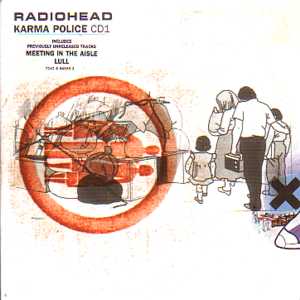
Karma Police


I recently had a bit of a run-in with the administration of a large Buddhist internet forum. The administration had recently changed and the new powers were taking a dim view of the free-form expression and allegedly almost 'anything goes' attitude of many of the posters on the Zen forum and were taking steps to purge this element. References to burning Buddha statues, killing the Buddha or questioning the authority of the mainstream interpretation of Buddha's teachings were to be forbidden.

Now, I've never been much into posting pictures of flowers or *gasp* pop lyrics on that forum. Most of my involvement was relatively serious discussion. Nor have I seriously challenged the accepted view of the content of what Buddha taught. However, I freely express my own agnosticism or doubt about unknown metaphysical truths such as the traditional descriptions of karma and rebirth.

Because of not accepting this, I thought I would have to always remain on the periphery of Buddhism. Yet it is clear that the Soto Zen sect I belong to does not insist on such beliefs. It appears that Brad Warner's branch of Zen does not insist on such acceptance or belief either since when I asked Gudo Nishijima directly about the afterlife he replied essentially that when we die 'that's it'. This as far as I understand could actually be classed as the view of Annihilationism - definitely regarded by Buddha as a 'wrong view' but this is another story and perhaps I misunderstood him.

Even though these administrators were not Zen practitioners they took the view that 'Zen Buddhists are Buddhists first' - in the sense that Zen Buddhists too had to accept 'Right Understanding' and that Right Understanding included acceptance of karma and rebirth.

My take was that a Zen practitioner does not cling to beliefs one way or the other. That moment-to-moment rebirth renders life-after-death meaningless and that belief that 'we' will be reborn ('sans self' or not) may be a form of covert Eternalism. But it was made clear to me that my views were not welcome anywhere on the board, so I have voluntarily avoided the place since.

Thursday, September 07, 2006

Radiohead: V Festival 2006


What can I say? They did a huge set with loads of stuff from OK Computer and The Bends. They played Creep. Wow...

Beauty tips

People who meet me generally think I'm about 30 or in my early 30s, yet I'm at the venerable age of 37 years old! One colleague even thought I was 25! So, although no one ever asks me how I stay so young-looking I'm going to do the right thing and tell you anyway:

  1. Eat healthily
  2. Don't get too stressed about not doing enough exercise
  3. Avoid excessive sunlight.
    Why not try staying indoors and sitting in front of a computer instead?
  4. MAINTAIN A NEUTRAL FACIAL EXPRESSION AT ALL TIMES

Friday, August 04, 2006

Zen and therapy

Godo Guy Mercier talked of zazen at times in terms similar to a self-help therapy with destructive emotional and mental habits resolved through careful observation over a long period of time. Not radically dissimilar to Cognitive Behavioural Therapy I suppose.

In a recent podcast I was listening to, Cho Bo Ji was similarly describing Zen, free from mythology and in terms of acceptance of reality and avoiding getting 'mentally stuck'.

Stephen Batchelor describes Buddhism in secular terms, stripped of religious beliefs, leaving just a path to a positive way of being.

All of this makes a lot of sense to me. Yet there was quite a strong backlash against Batchelor from the Buddhist community, who apparently rejected his agnosticism about rebirth and karma, apparently seeing Batchelor's version of Buddhism as a pale, secular shadow of their noble religion, with it's talk of other worlds, heavenly realms and cycles of birth and death.

So, were they right or can Buddhism be described in terms of psychotherapy?

While it's natural for people to hold onto religious beliefs and be attached to myths about creation, life after death and so on, however I never really saw such beliefs as the essence of Buddhism. Buddha tended to refuse to answer metaphysical questions either on the basis that they are irrelevant to finding an escape from suffering or that the questions themselves were misconceived. Certainly I don't see Buddhism as intended as a belief system. It's for these reasons that I practice Zen rather than one of the schools of Buddhism, which are heavier on metaphysical or supernatural belief.

There are a number of therapists who have made similar claims (references needed), regarding Buddhism as an example of self-realisation which goes beyond ordinary therapy. There are countless therapists who incorporate Buddhist techniques and countless Buddhist books sold as theraputic self-help books.

One difference is that therapy is seen as a cure for the abnormal psychology of the section of society which is regarded as pathological, in other words, 'sick'. Buddhism on the other hand is seen as a universally appropriate practice. It is for this reason, that practicing Buddhism may been seen as having less of a social stigma than receiving therapy. To be precise, this is not because Buddhism does not pathologise one section of society, but because Buddhism regards virtually every sentient being as 'sick' in a sense. Only arahants and/or buddhas are free from this 'disease' that is existence. I think the key difference here is that our attitude towards mental health tends to be normative, that is, the goal of therapy is to make the abnormal normal. Buddhism on the other hand points out that normal people are in a state of suffering too and proposes that it is possible to be better than just 'normal'.

Far from being shameful, to practice Buddhism is regarded in Buddhist societies as a noble pursuit. Wouldn't this attitude of respect for one who has taken responsibility for his or her own welfare be more conducive to mental health and to people's preparedness to deal with these problems, than the current dominant one of castigating those who take such steps as 'the sick' and 'abnormal'? Perhaps it relates to a western attitude of scorn towards those who seek to find happiness in favour of those who are stoically productive?

So perhaps both Buddhism and therapy can be seen as not fundamentally different, just with different cultural meaning and with goals set at different points. But, if this is the case, what about Buddhist philosophy and Buddhist insights? Well, in Buddhism, thoughts are inseparable from the thinker - philosophy is just the mental acts of a particular being at a particular time - there are no Platonic thought-forms existing in some transcendent abstract plane.

One of the most brilliant and influential philosophers of the 20th century, Ludwig Wittgenstein, saw metaphysical philosophy as a sort of sickness - an overextension of linguistic terms beyond their valid scope, attempting to speak about that which is ineffable. There is a lot of overlap between this an Zen. In Buddhist terminology this might be described as a confusion between conventional and ultimate truths. Wittgenstein's cure was Linguistic Philosophy - language is based on convention and needs to be reigned in when it is applied as if universally applicable.

Our grandest philosophies and most penetrating insights are still just thoughts. Our insights are just the dropping away of our delusions and in that sense are dependent upon them. This is one reason not to get attached to any insights we have. Even if we become 'fully enlightened', we are still entirely human.

Friday, July 28, 2006

Mundane

At the risk of boring the internet community stupid here are some pictures of my everyday life. This is reality for me. I'm cautious about posting details of my releationships with other people and emotional life so it's all practical stuff. To what extent are my abstract musings an escape from this reality?


An empty skip - boring? Not to me.


Not bad for an evening's work


Wednesday, July 19, 2006

My Japanese Garden #1

This is a photo of the garden I took just before we bought the property. Nearly half of it is covered in a concrete patio. The rest of it is patchy, overgrown lawn. If I had realised that the concrete was 6 inches + thick I might have thought twice about removing it, but it's ugly as hell - what were they thinking?


This is just the top layer of concrete - the second layer was slightly thinner.

I've been doing bits and pieces for a couple of month now, chopping down trees, getting rid of piles of rubble at the far end and so on, but now it was time to tackle The Big One - the patio - and my lump hammer just wasn't up to the task. So at the weekend I hired a skip and a pneumatic drill and I broke it all up. Unfortunately, it's not called a mini skip for nothing and I filled it up in no time. So I got another one today. This is how the garden looked earlier today - this must be its lowest point in terms of immediate appearance - the Beirut look.

I removed the vast bulk of the remaining rubble and bricks tonight, with some help from Emily and our second skip is 3/4 full. I'll post another picture of the cleared up garden when I get a chance.

A few years ago I might have found this pretty boring. But I'm getting some real satidfaction out of the project even if it's going to take a long time.

Tuesday, July 18, 2006

Working in sweltering London and crappy hotels

I wish I was in the habit of carrying my camera with me everywhere if only to record the sheer crappiness of the hotel I just stayed in. I'm doing freelance work with an agency in London on a regulal basis now - which is great, I need the money and it means I'm finally working in something that resembles a 'proper design agency' with pretty varied and creative work. I used to live in london and although I'm glad to have moved out I do enjoy the buzz of visiting and working there. It's quite a trek from where I live in Banbury, so when I have two days work together it makes sense to get a room somewhere. I don't need a gold leaf wardrobe, all I need is a clean, simple room. I've stayed in plenty of corporate chain hotels and they are pretty soulless in spite of high quuality fittings.

The first place I stayed was The Generator - which is really a glorified backpacker's hostel. I enjoyed watching France play Portugal with a bunch of complete strangers and reading with cold beer in my hand. But my reservation got messed up this time and I ended up in the worst hotel I've ever seen in this country - furniture held together with cellotape, no hot water, sheets and towels with stains. Nice. Maybe I'll start a hotel photo diary.

There was Chilli Peppers gig on in Earl's Court and I had to fight my way through literally thousands of drunk sweaty fans coming in the opposite direction.

Monday, July 10, 2006

if only I can make a perfect rakusu...

I've always been wary of adhering to any sort of belief system, but I've found little in Soto Zen to object to on that front. For me it's more about releasing attachment to beliefs than gaining new ones. I do wonder though whether some of the people I practice with are attached to the trappings of the practice - the ceremonies, the wearing of kimonos and kesas, the chanting in archaic Sino-Japanese. I wonder if they will eventually burn the raft of the dharma in order to achieve greater liberation or whether they will float around in circles anchored to the Buddha.

I just go there to sit. The only time I wore a kimono was on an occasion when I was asked to lead a sitting - it seemed inappropriate not too. I do see usefulness in ritual acts in terms of mindfulness though. And I am sewing a rakusu.

However, I wonder whether this rakusu is just another useless attachment. When it is complete I don't know whether I will get ordained in it, give it away or destroy it. What would lead to the least attachment, bearing in mind that rejection is a form of attachment too? It's a sort of 'koan' for me right now. I'm damned if I do and damned if I don't. So I'm just focussing of practicing detachment - I'll just see what I do.

It seems possible to wear robes etc without attachment. For myself I wonder if it creates a sense of separation between ordinary life and spiritual life.

I question the motivation for wanting to wear a special costume enough that I would make substantial efforts to own one. Is it that we want to belong? Or feel holy? I know people I practice with who seem very attached to their rakusus and kesas - not at all surprising when they painstakingly stitched them by hand. They get ever so upset if they get dirty? Am I not creating one more thing to cling to ? More conditions for freedom and happiness?

I see the Believers of other religions around me practicing similar things to Zen. Are they doing it because it is a raft to take them to enlightenment? All of them? And we see similar things with ideologies of all sorts. They all have their rationalisations for while such things are needed. Maybe it has more to do with a sense of belonging to something 'special' and 'sacred'? Maybe it has everything to do with social psychology and nothing to do with the furtherment of enlightenment. I don't know. Maybe it can be both.

What this is really about deep down is this: I have a fear of having my mind melted by religious indoctrination. This isn't something I associate with zazen (which is a good anti-BS tool) but with religious trappings and beliefs - even the minimal ones of Zen. I practice Zen in part because it is so minimal in this regard, but it is there nevertheless.

'Fear' is a bit strong, but I have a slight anxiety that by accepting the uniform of a faith I am discouraging myself from testing for myself, thinking for myself and replacing that with conformity to doctrine and blind (or at least only partially sighted) faith. Zen is gooood....Zen is gooood...Zen is the solution to all problems...if only I can make a perfect kesa... Within Zen I believe this is sometimes called 'Zen sickness'.

Here is a fairly extreme attitude of importance attached to religious trappings in Soto Zen. I suspect that this attitude has a more to do with protecting and furthering Zen as a social institution than it has to do with individual awakening.

Not just a garment, the kesa itself is zazen. It is the robe of zazen and the robe of true Zen practice. Since the time of Shakyamuni, all of the masters of the transmission received, respected, wore, taught and passed on the kesa. Like zazen, it is nothing mysterious or mystical, but a natural part of our daily practice.

Some might say the kesa is not really important: "It's a formalism, unnecessary, zazen alone is enough, I don't need to wear it." And of course someone can do zazen without a kesa, it is not absolutely necessary. But without the kesa, zazen becomes only a method of body-mind training, not a true religion. For those who seek the Way, the kesa has a great value.

Wearing the kesa and doing zazen, unconsciously, naturally, automatically, we can receive the great merits of the true Way. Anyone can wear the kesa, and whether it be the grand kesa or the rakusu (mini-kesa), the merits are the same. It protects us as it protects the Way itself.

Comments? Advice? Anecdotes?